Introduction
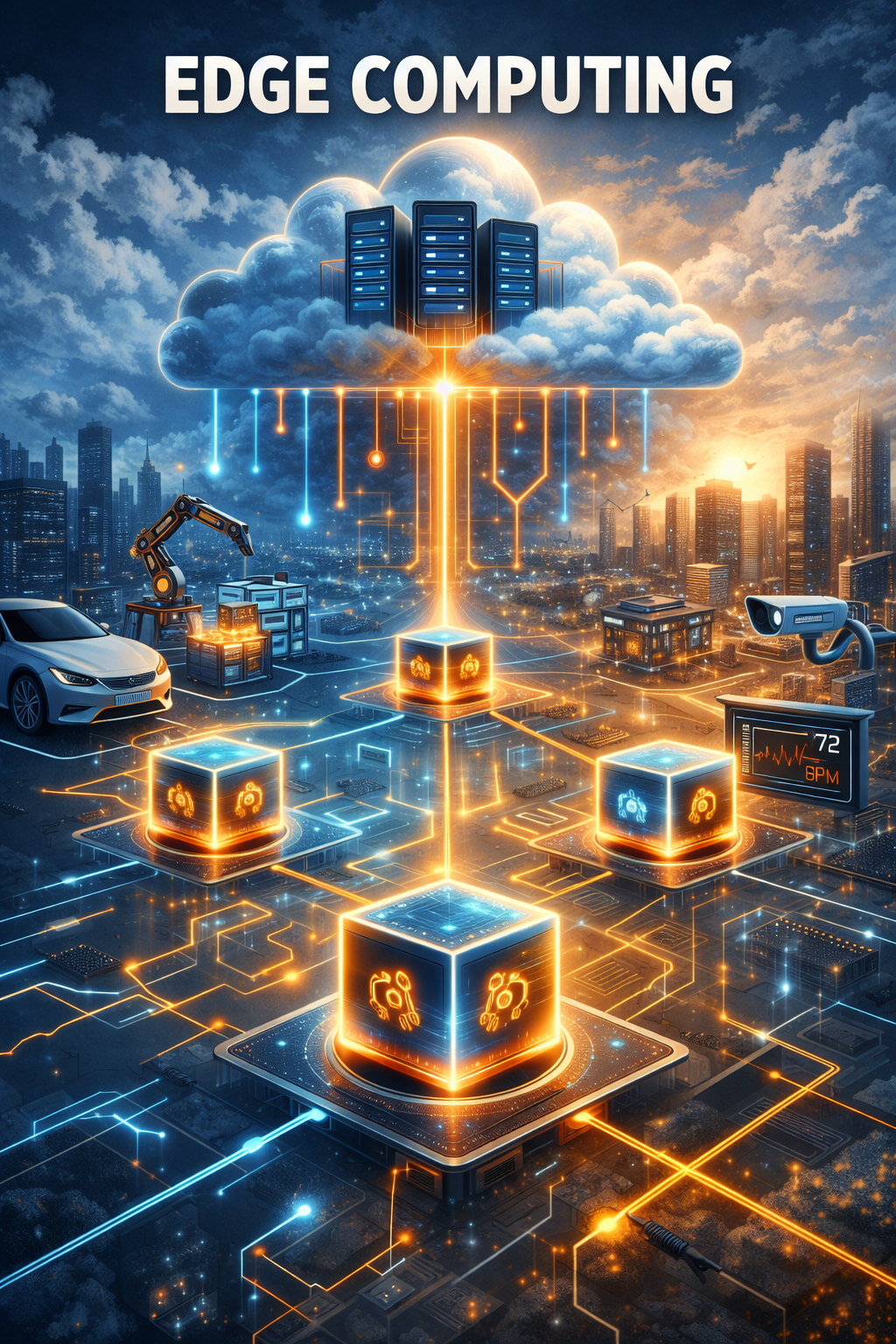
As the demand for real-time processing grows, traditional cloud computing faces limitations in latency and bandwidth. Edge computing emerges as a solution by processing data closer to its source.
What Is Edge Computing?
Edge computing involves:
- Processing data locally (near devices)
- Reducing dependency on centralized cloud servers
- Enabling faster responses
Why It Matters
With technologies like IoT and autonomous systems, milliseconds matter. Edge computing reduces:
- Latency
- Network congestion
- Data transfer costs
Organizations such as Amazon Web Services and Microsoft Azure are investing heavily in edge solutions.
Use Cases
- Autonomous vehicles (real-time decision making)
- Smart cities (traffic and energy optimization)
- Healthcare devices (instant monitoring)
- Industrial automation
Challenges
- Security risks at distributed nodes
- Infrastructure complexity
- Data consistency issues
The Future of Edge + Cloud
Rather than replacing the cloud, edge computing complements it:
- Cloud handles heavy processing
- Edge handles real-time tasks
This hybrid model defines the next generation of computing.
Conclusion
Edge computing is reshaping how data is processed and delivered. By moving computation closer to reality, it enables faster, smarter, and more efficient systems.